Rustbox for AI Agents: Safer Code Execution Without Managing Infrastructure
Rustbox gives AI teams a safer code execution layer for agent-generated snippets without building and operating runner infrastructure.
AI agents are useful because they can reason, write small programs, transform data, and call tools. That same flexibility creates a product problem: where should generated code run? Rustbox gives teams a controlled code execution API so agent workflows can use code without forcing your team to operate runner infrastructure.

Why AI agents need code execution
AI agents often reach for code when text is not enough. They may need to parse JSON, clean a CSV, calculate a metric, validate a generated answer, or call a public API and reshape the response. A short Python or JavaScript snippet can be the simplest tool for the job.
The catch is that generated code should not be treated like trusted application code. It can be wrong, inefficient, incomplete, or shaped by user input. Even when there is no malicious intent, the platform still needs limits, timeouts, output handling, and a clear way to know what happened.
Rustbox exists for that boundary. It gives your agent a place to run code and gives your product a structured result to inspect before the agent continues.
Agent-to-Sandbox Execution Flow
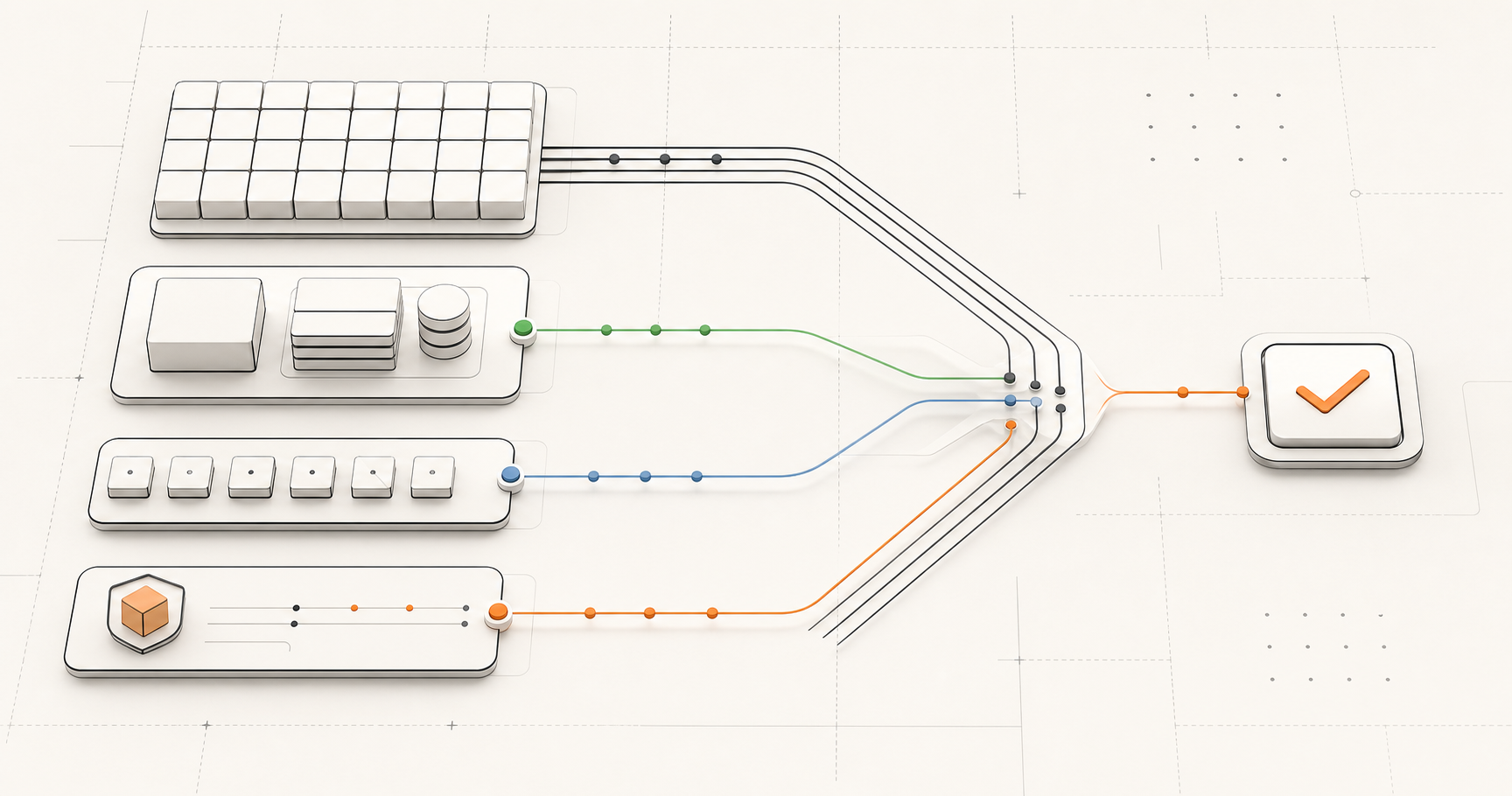
Integrating a code-execution boundary should not introduce architectural complexity. Here is how an orchestrator interacts with Rustbox synchronously during an active reasoning loop:
LLM Generates Snippet
The agent determines a math/data calculation is required, generating a self-contained Python code payload.
Secure Request Dispatch
Your application intercepts the tool call, wraps the payload in a Rustbox API request, and posts it to our managed service.
Isolated Execution & Classification
Rustbox compiles/runs the snippet inside kernel-level cgroups, capturing limits, resource metrics, and returning structured stdout/stderr.
Orchestrator Continues
The agent parses the execution verdict, incorporates stdout results directly into its prompt context, and outputs the final response.
The infrastructure problem behind agent code execution
A prototype code tool is easy to demo. The agent writes code, the backend runs it somewhere, and the output goes back into the model loop. Production is different.
Once customers rely on the agent, your team needs consistent language runtimes, request limits, job tracking, result storage, retries, usage controls, and a support story for failed runs. You also need to avoid mixing generated code execution with the rest of your application backend.
That is why managing code execution infrastructure can become a distraction. Your team wanted to build a better agent product, but it ends up maintaining a runner, queue, worker fleet, and result pipeline.
How Rustbox fits into an AI agent product
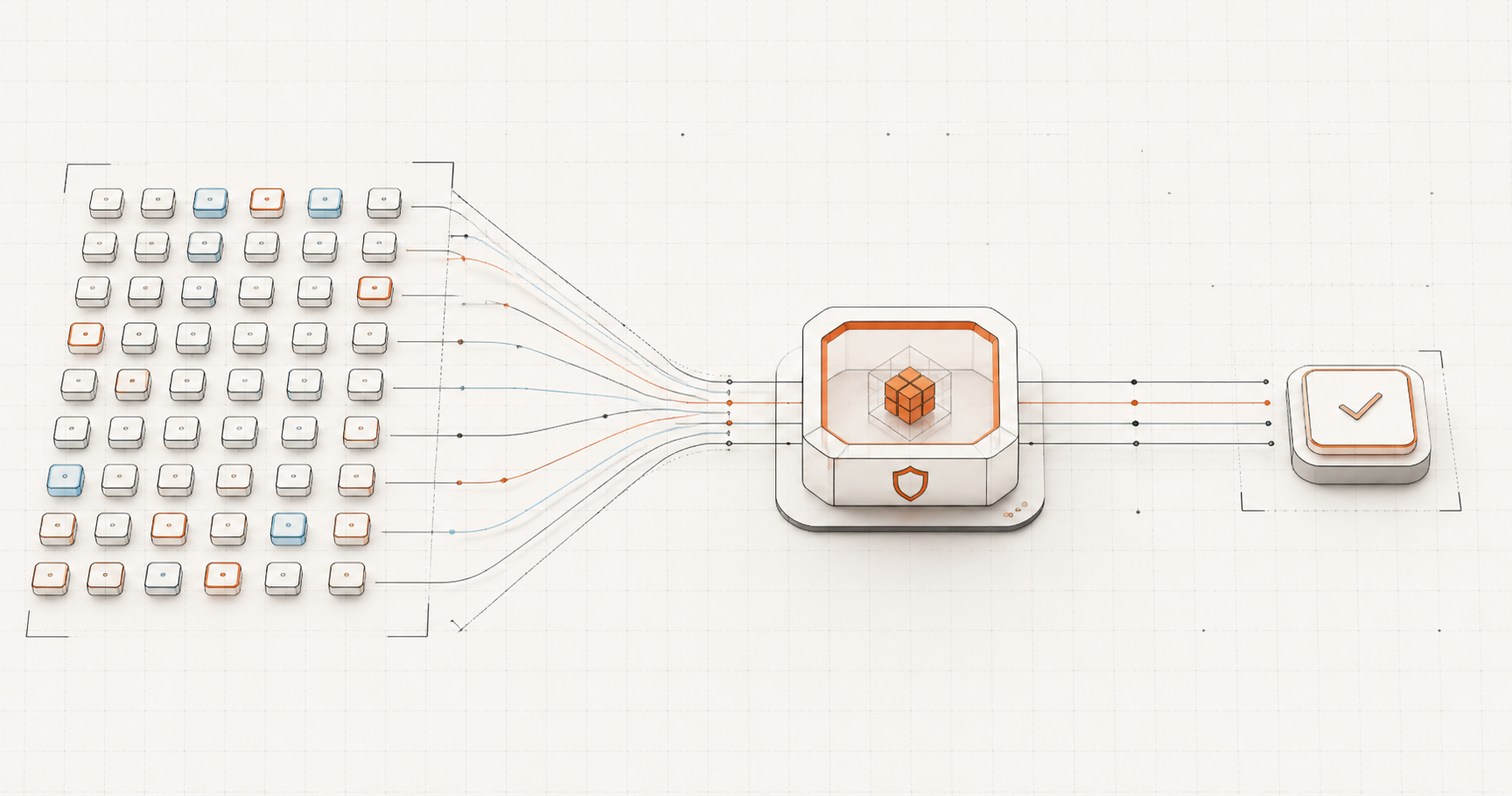
Rustbox works as an execution layer behind your agent orchestration. The agent decides it needs to run code. Your backend sends that code to Rustbox with a language and optional input. Rustbox returns the output, execution status, and useful runtime fields.
This keeps your product architecture clean. The model chooses a tool, your backend authorizes the request, Rustbox handles code execution, and your agent receives a result it can use in the next step.
const result = await client.run({
  language: "python",
  code: "import json\nprint(json.dumps({'ok': True}))",
});
For teams building agent workflows, the main benefit is focus. You can spend engineering time on prompts, tools, evaluations, product flows, and customer-visible reliability instead of maintaining your own code runner.
Isolation Profiles: Closed vs Proxy Outbound Route
AI agents have varying needs regarding network connectivity. Rustbox resolves this by supporting dual isolation configurations, allowing developers to balance safety and capability:
Absolute Security
Completely cuts off all network namespaces. Ideal for sandboxing completely untrusted scripts, grading loops, and sensitive data processing where exfiltration is a critical risk.
- ✓ No data leakage channels
- ✓ Reduced attack surface
- ✓ Strict CPU/Memory boundaries
Controlled Connectivity
Routes agent outbound traffic exclusively through a secure, embedded proxy container. Allows HTTPS calls (port 443 only) with strict byte rate-limits and destination blocklists.
- ✓ Web scraping & third-party APIs
- ✓ Domain and endpoint white/blacklists
- ✓ Strict egress rate-limiting
Agent workflow examples that fit Rustbox
Rustbox is most useful for short, bounded code tasks where the agent needs a deterministic tool result.
- Transforming data from one JSON shape into another.
- Checking calculations before the agent writes a final answer.
- Running small snippets generated from a user instruction.
- Testing examples before adding them to a report or answer.
- Executing language-specific helper code from an internal tool.
The pattern is not to let the agent do anything it wants. The pattern is to give the agent a narrow, observable execution tool with product limits around it.
How to integrate Rustbox with AI agents
Put Rustbox behind your backend, not directly in the browser. Your backend should decide which users, agents, or workflows can run code. It should also attach project or account context so usage and support records stay understandable.
Start with direct HTTP or one of the Rustbox SDKs. Use sync execution for short tool calls where the agent is waiting. Use async execution when the tool can continue later. Use webhooks if you want your system to receive completed results without polling.
Also keep the agent prompt honest. Tell the model what the tool is for, what inputs are allowed, and when it should avoid code. Safer execution infrastructure is useful, but product-level guardrails still matter.
Frequently asked questions
Can Rustbox be used as an AI code interpreter backend?
Yes. Rustbox can serve as the execution API behind an AI code tool or code interpreter workflow, especially when your product needs a clean request and result boundary.
Should AI-generated code run in my main backend?
Usually no. Generated code should be handled as a separate execution concern with clear limits, result capture, and observability.
Does Rustbox replace my agent framework?
No. Rustbox is the code execution layer. Your agent framework still manages reasoning, tool selection, memory, evaluation, and user experience.
Add controlled code execution to agent workflows
Start with the Rustbox quickstart, then connect direct HTTP or an SDK from your agent backend.
Open Rustbox quickstart